There are many tools that companies use to manipulate and understand data. Because of all the options, it is natural that there is a difficulty in understanding and a certain confusion between some of the terms. For example, do you know the difference between dashboard and balanced scorecard?
Know the differences in this article!
What’s each one of them?
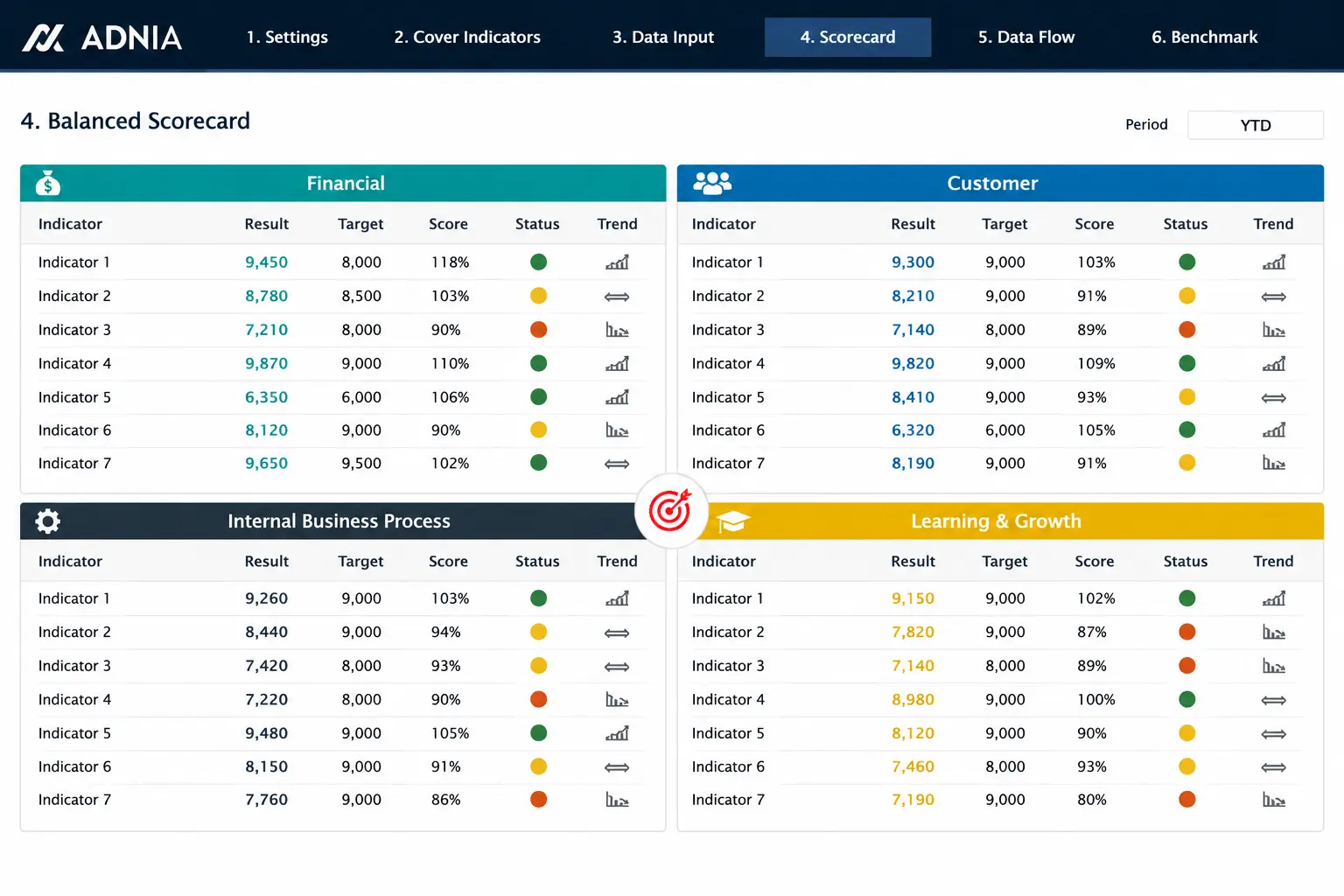
The first information that should be understood is that a dashboard is a concept and not a tool. According to the most widespread definition, a dashboard is a visual representation of a set of information needed to make one or more objectives, on a single computer screen, in order to allow easier monitoring and understanding. Within Excel, for example, there are several tools for creating dashboards. The idea behind the dashboards is simple to understand. With so much information available to companies and an increasing need for agility in operations, it is necessary to apply concepts and tools so that this data assimilation is simpler. That’s why this concept and the tools behind it help find the most important answers for the business. The balanced scorecard is a method that aims to manage a company’s strategy. The purpose is to help companies and managers to work with a more forward-looking vision, with a focus on actions or projects with long-term impact. Therefore, to do this, the balanced scorecard implements 4 main views about the company:- Financial: addresses how much the company will have to return and spending on each action;
- Clients: focuses on the client, seeking to increase the number of them, and also promote actions focused on him;
- Internal processes: illustrates the internal processes required to meet the objectives;
- Learning: aims to find the mistakes and successes discovered in the above views, to implement them and achieve the objectives more easily.
Example of Balanced Scorecard in Excel